May 19, 2026
Journals
What Startups Really Want From Their Office Space
What Startups Really Want From Their Office Space
The corner office is dead. The cubicle farm is a relic. And the ping-pong table? That era is quietly fading too.
Today's startups are asking a more serious question when they walk into a potential office space: does this place help us build something great?
The answer isn't just about square footage or location. It's about how a space makes people feel, how it shapes culture, and how well it grows alongside the business. Here's what modern startups are genuinely looking for — and why it matters for every office interior designer, workspace design company, and commercial interior contractor working in this space.
Identity From Day One
Startups are building brands at breakneck speed. They want offices that reflect who they are — not a generic, beige shell that could belong to anyone.
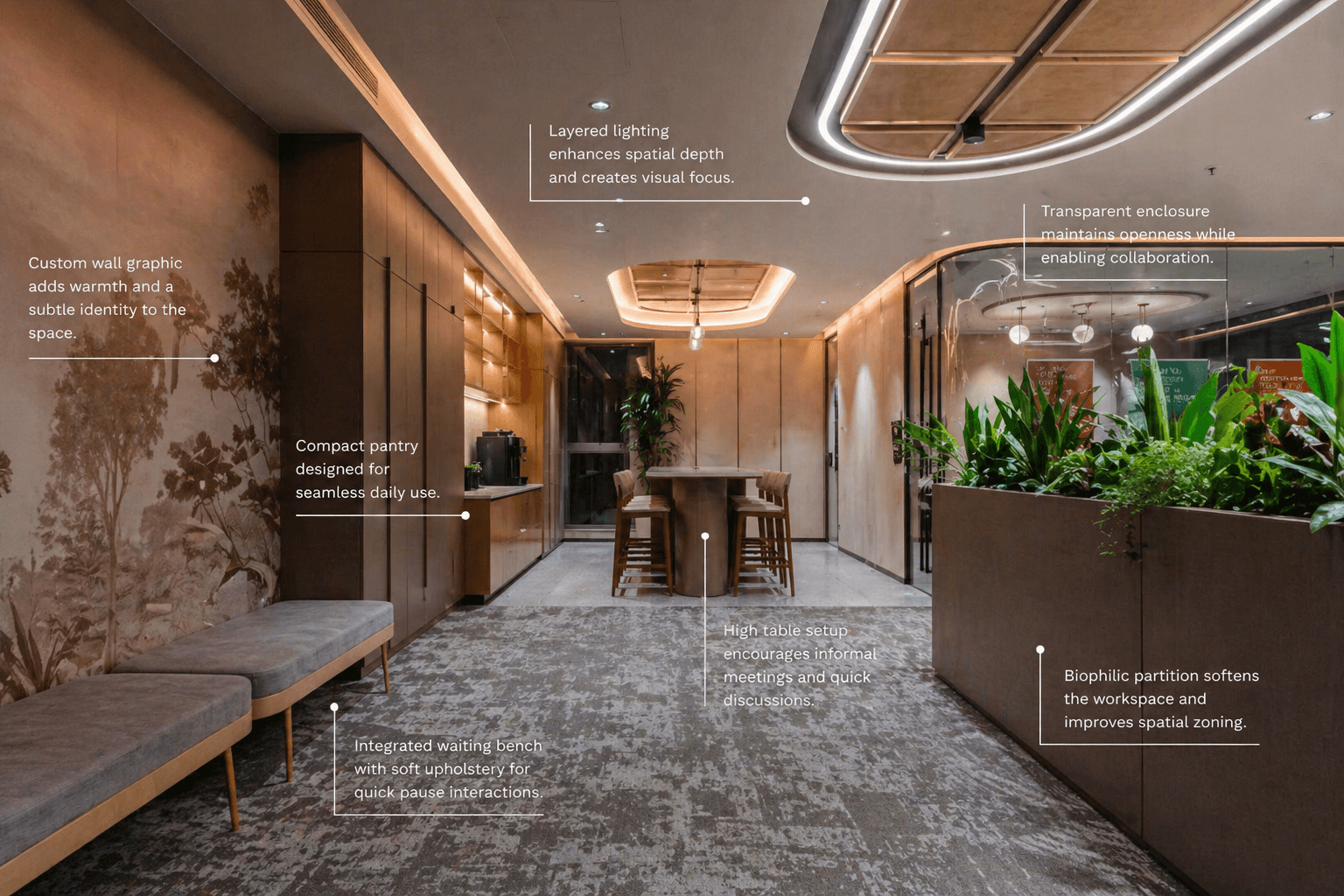
From the moment a candidate or client walks through the door, founders want them to feel the company. That means custom touches: branded colour palettes woven into the walls and furniture, statement pieces that double as conversation starters, and spatial storytelling that communicates the company's mission without a single word being spoken.
This is exactly where experienced office interior designers in Hyderabad make the biggest difference — translating a founder's vision into a physical environment that speaks for the brand before anyone opens their mouth.
A well-designed interior is one of the most powerful employer branding tools a startup has. And the best ones use it unapologetically.
Spaces That Work as Hard as Their Teams
Startups don't have the luxury of wasted space. Every square metre needs to pull its weight.
That's why the most sought-after office interiors today are multi-functional by design. A meeting room that converts into a pitch space. A kitchen island that becomes a stand-up sync spot. Lounge areas that shift between deep-focus zones and casual collaboration corners depending on the time of day.
Modular furniture, moveable walls, and flexible layouts aren't just nice to have — they're essential. A team of 20 today might be 60 in eighteen months. The space needs to flex without requiring a full refit. A skilled office fit out company plans for this from the very first design brief, building adaptability into every decision.
The End of "One Size Fits All" Seating
Open-plan offices were once the gold standard for startups. The logic made sense: tear down the walls, and ideas would flow freely.
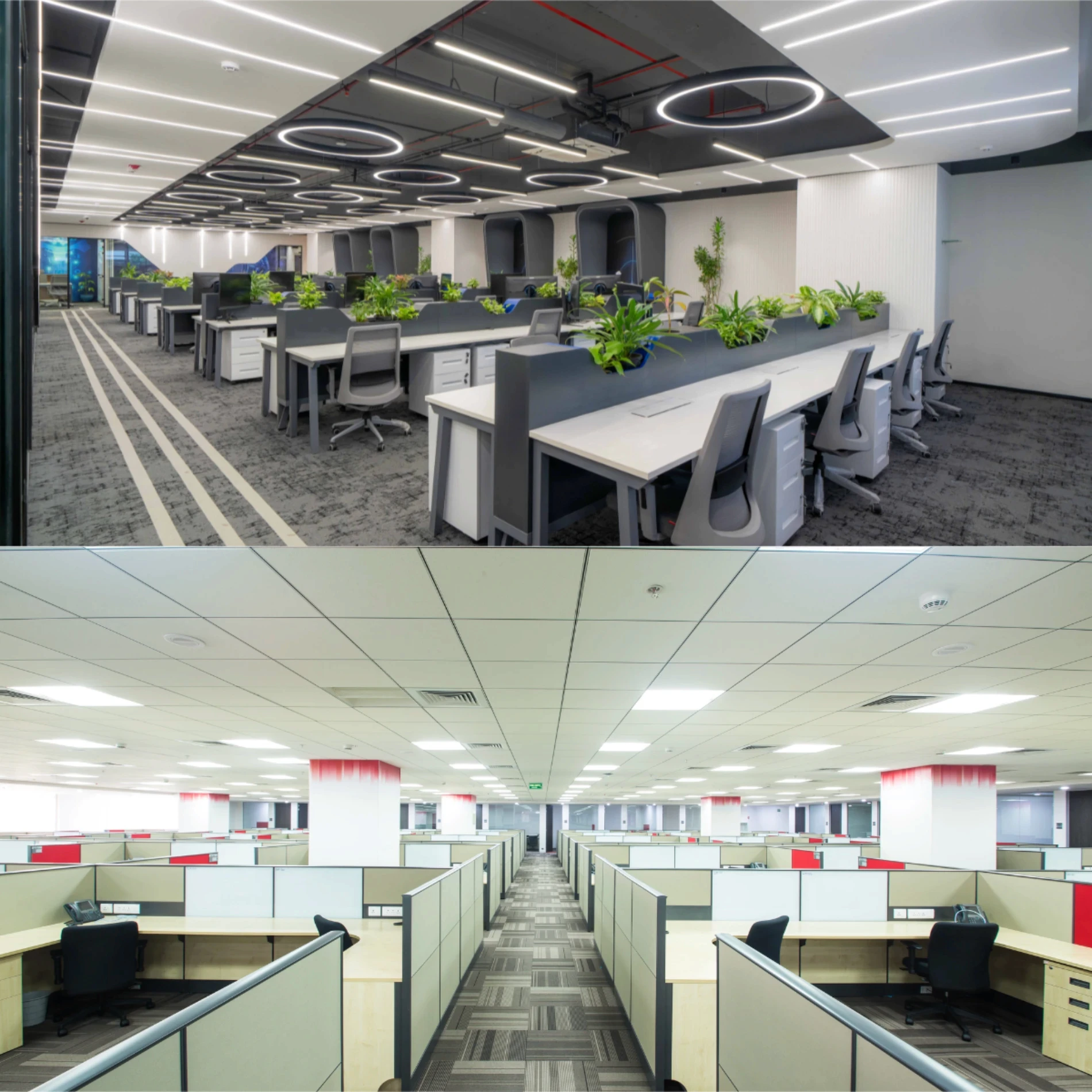
The reality proved more nuanced. Developers need deep focus. Sales teams thrive in energy. Designers think best with room to spread out. A great corporate office interior acknowledges all of this.
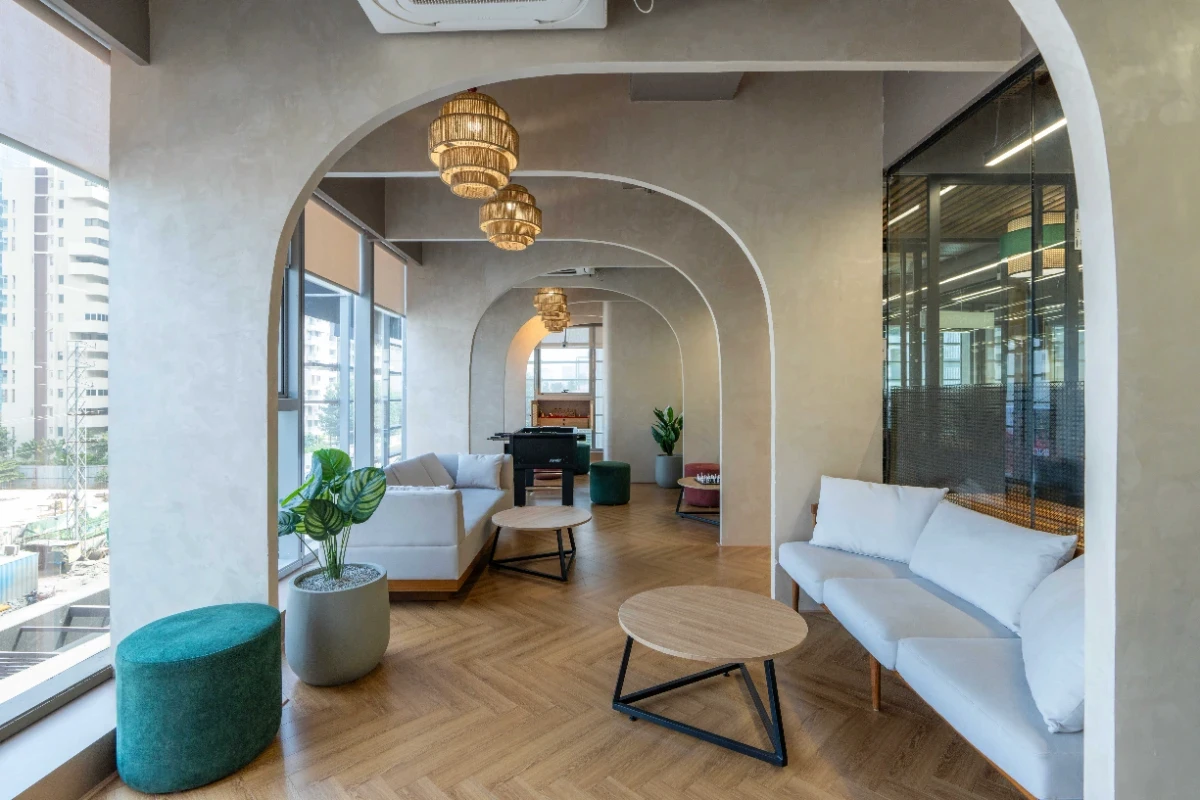
Today's founders want a variety of environments under one roof — quiet pods for concentrated work, collaborative zones for team sprints, semi-private booths for sensitive calls, and open areas for the informal conversations that spark ideas. The office becomes a toolkit, and employees choose the right tool for the task at hand.
The best commercial interior designers in Hyderabad understand this shift deeply — designing not just for how an office looks, but for how people actually work inside it.
Natural Light and Human-Centred Design
Wellness is no longer a perk. It's a baseline expectation.
Startups — particularly those competing for top talent — know that the physical environment directly affects energy levels, mood, and output. Natural light is the single biggest request. After that come biophilic elements: plants, natural textures, materials that ground people amid the digital intensity of startup life.
Ergonomic seating, proper acoustic treatment, and thoughtful air quality are no longer extras reserved for large corporates. Startups are demanding them too — because their people are their most important asset, and burning them out in an uncomfortable space is a cost no early-stage company can afford.
Whether you're looking for office interiors near me or scoping out a workspace interior company for a full fit out, human-centred design should be a non-negotiable in your brief.
Tech That Disappears Into the Walls
The best technology in a startup office is the kind you don't notice. Wireless presentation systems that just work. Booking panels outside meeting rooms that prevent the eternal double-booking problem. Smart lighting that adjusts through the day. Power and data access built into floors and furniture so cables never win.
Startups are digital-native by default. Their office design needs to match. Anything that creates friction — a cable that doesn't reach, a screen that won't connect, a room that looks great but sounds terrible on calls — is a daily tax on productivity.
This is where turnkey office interiors deliver real value: a single team handling everything from space planning and furniture to AV, lighting, and tech infrastructure — so founders don't have to manage ten different contractors.
Room to Grow (Without Starting Over)
Perhaps the most underrated thing startups look for in a commercial interior is scalability.
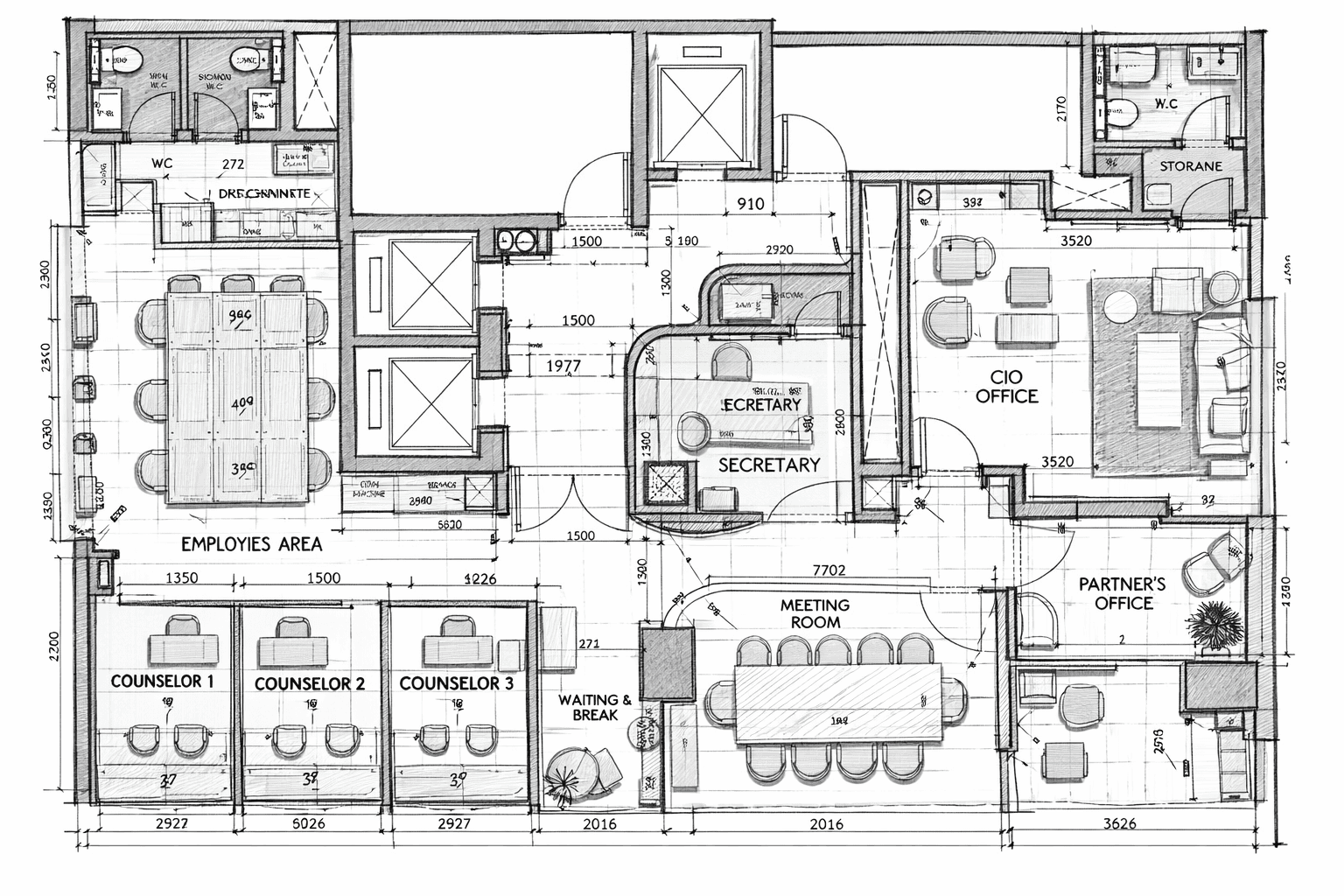
They don't want to move every two years. They want a space that can grow with them — where adding a team or reshuffling a department doesn't mean a full office renovation. That puts intelligent space planning at the top of the brief from day one.
The best commercial interior contractors understand this. They build in flexibility, plan for future infrastructure needs, and create layouts that evolve organically rather than requiring a blank-slate rethink every time the company hits a growth milestone. For startups in Hyderabad's fast-growing tech and business ecosystem, this kind of forward-thinking workspace design is quickly becoming the standard — not the exception.
The Bottom Line
Startups don't want an office. They want a home base for ambition.
They want a space that attracts the people they're trying to hire, impresses the clients they're trying to win, and energises the team they're trying to retain. They want it to reflect where they're going, not just where they are.
And when they find a commercial office interior partner who truly understands that — who sees the office not as a box of furniture but as a strategic tool — that's when something remarkable gets built.