Apr 4, 2026
Journals
The Rise of Fluid Workspaces and Why Fixed Desks Are Fading
activity based working, fluid workspace, hot desking, future of office, workspace trends India
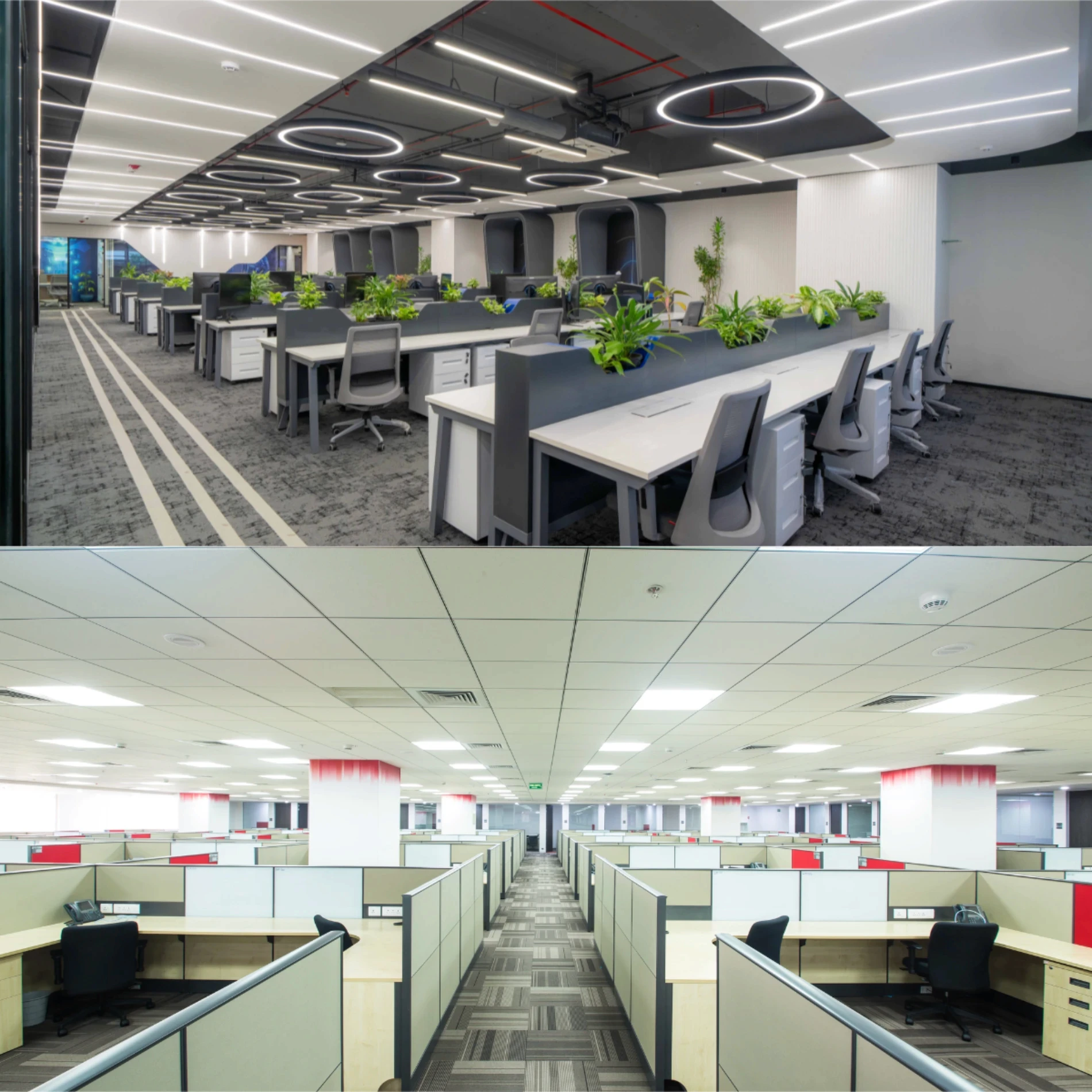
For most of the 20th century, the office was a simple equation: one employee, one desk, one chair. Your desk was your territory. You personalised it with family photos and a plant. You knew exactly where you were going when you walked in every morning.
That model is fading and not just because of hybrid work. The deeper reason is that the fixed desk was never really designed around how people actually work. It was designed around the industrial assumption that work happens in one place, by one person, doing one thing. That assumption no longer holds.
What Is Activity-Based Working?
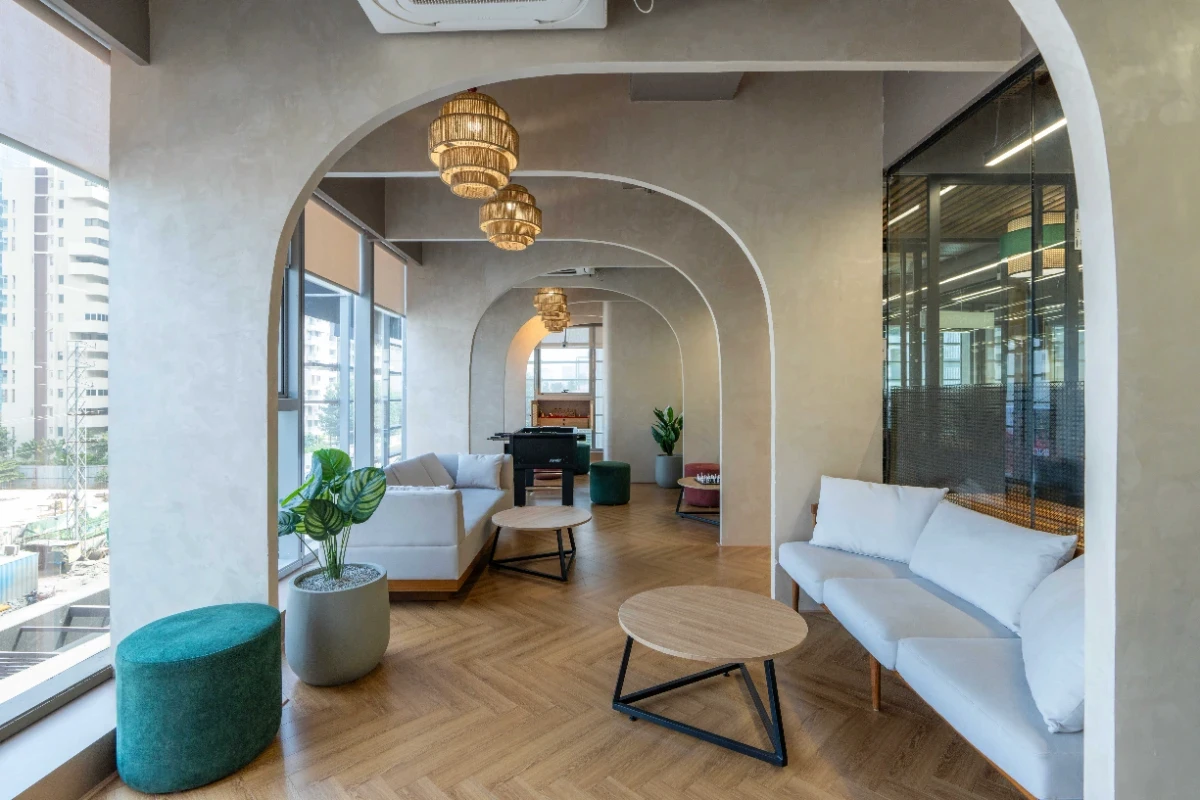
Activity-based working (ABW) is a design philosophy that provides a variety of settings for different types of work focus booths for deep concentration, collaborative tables for team sessions, informal sofas for casual conversations, phone pods for private calls and allows people to move between them based on what they're doing at any given time.
Instead of owning a desk, you use the right setting for each task. The office becomes a toolkit rather than a territory.
Why the Shift Is Happening Now
Hybrid work has accelerated the transition to activity-based models, but it's not the only driver. Occupancy data from smart office systems consistently shows that fixed desks are unoccupied 40 to 60 percent of the time even before hybrid work became widespread. Companies have been paying for empty desks for years without realising it.
A fluid workspace allows the same square footage to serve more people more effectively, reducing cost-per-desk and making the overall property footprint smaller and more efficient.
The data point that matters If your desks are occupied less than 70% of the time, you almost certainly have more desks than you need — and fewer of the collaborative, focus, and social settings your team actually wants. |
What This Means for Your Office Design
Designing a fluid workspace requires a different brief than designing a traditional one. Instead of calculating desks-per-headcount, you're calculating ratios of different setting types. Instead of allocating teams to zones, you're thinking about how work flows across the day and designing for movement.
It also requires infrastructure decisions that support flexibility: lockers for personal storage, robust wireless connectivity everywhere, writable surfaces and screens in informal areas, and acoustic management across a more varied set of settings.
The Pitfalls to Avoid
Activity-based working fails when organisations implement the setting variety without the culture to support it. If senior leaders claim fixed desks while everyone else hot-desks, resentment follows. If there aren't enough of any one setting type especially focus zones people will revert to camping at a desk all day simply because it feels stable.
The design has to match the culture. And sometimes the culture has to be shaped alongside the design.
Is It Right for Your Organisation?
Not every organisation needs a fully fluid workspace. Some roles genuinely require a fixed, personalised setup. Some cultures value the social continuity of sitting near the same people every day. The best workspace design is the one that actually fits your team not the one that follows the trend.
If you're curious about what a more fluid workspace could look like for your organisation, we'd love to explore it with you.