Mar 24, 2026
Journals
Why Tech Startups and Law Firms Need Completely Different Workspace Design
Tech startups and law firms require completely different workspace strategies. Discover how industry-specific office design impacts performance, privacy, and growth.
Not all offices work the same way.
And when businesses operate differently, their workspaces must too.
Designing a high-growth tech startup is fundamentally different from designing a law firm. The culture, workflows, confidentiality levels, hierarchy, and client interaction models are worlds apart — and the space should reflect that.
Here’s how:
1. Culture & Energy
Tech Startups:
Fast-paced, collaborative, experimental. Flat hierarchies. Constant ideation.
Design response:
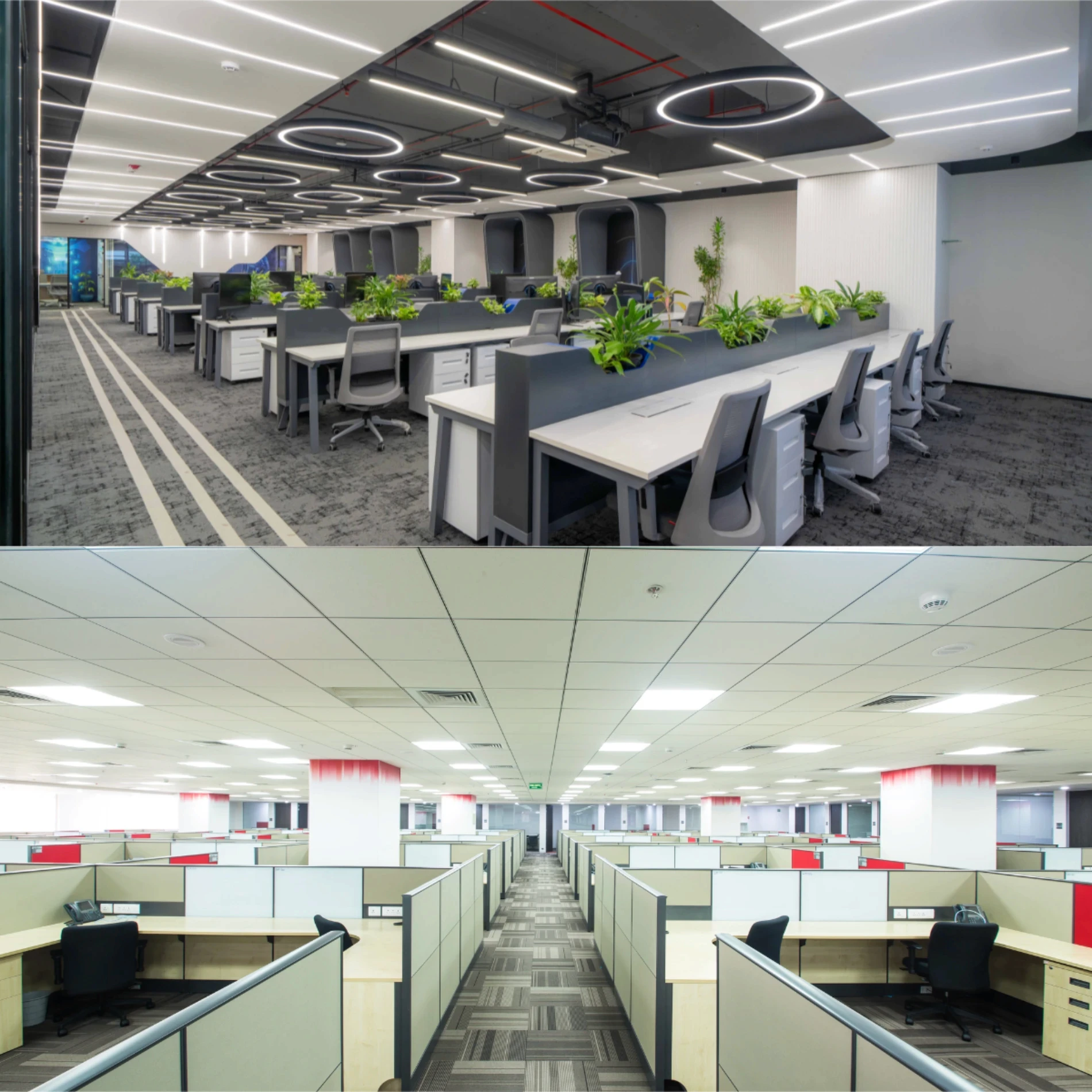
Open layouts
Flexible seating
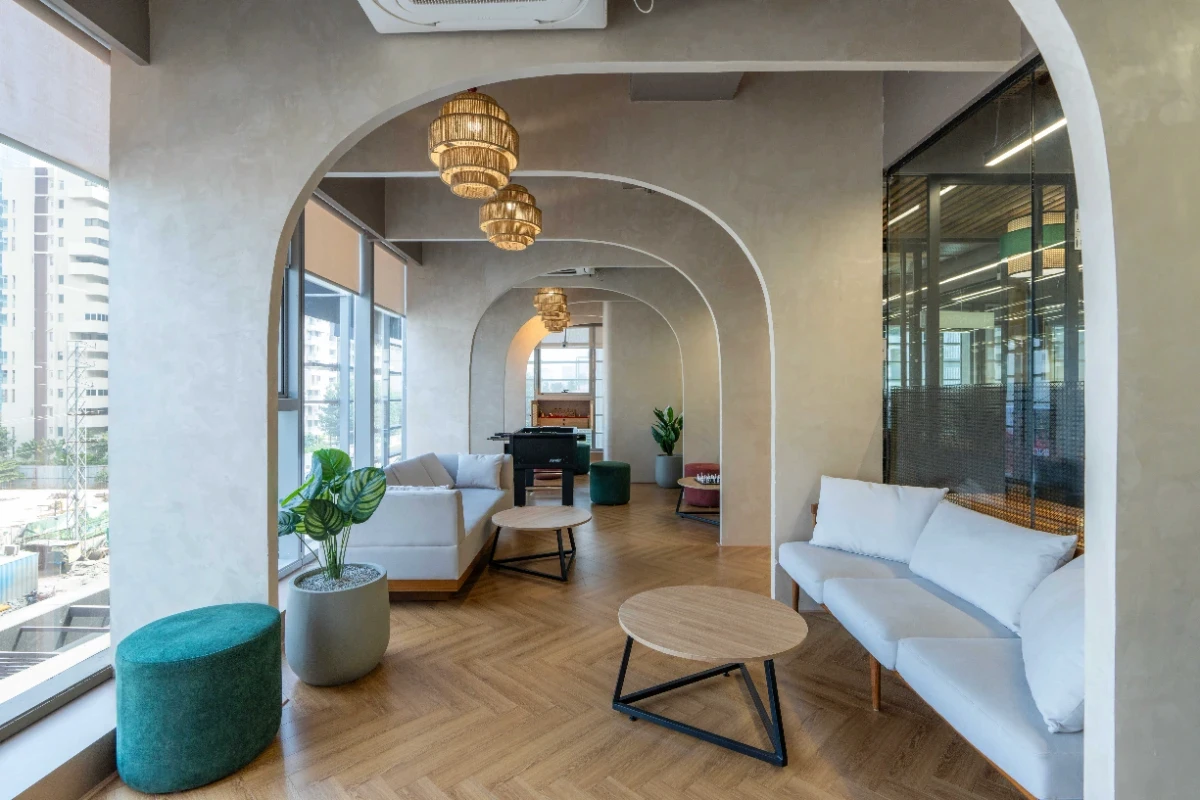
Collaboration zones
Breakout areas
Informal meeting pods
The space should feel dynamic and adaptable.
Law Firms:
Structured, hierarchical, formal. Reputation and credibility matter.
Design response:
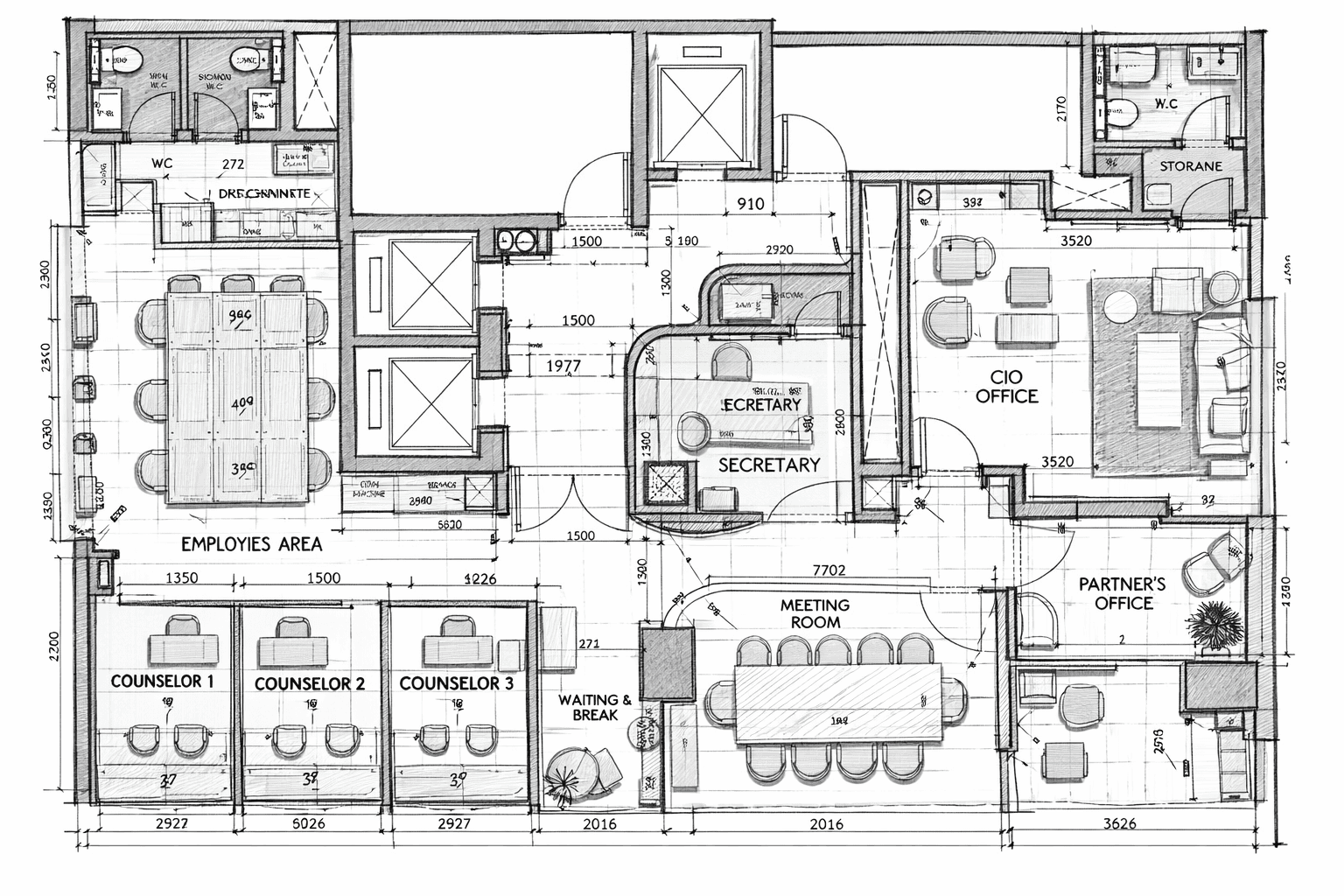
Private cabins
Soundproof meeting rooms
Defined circulation
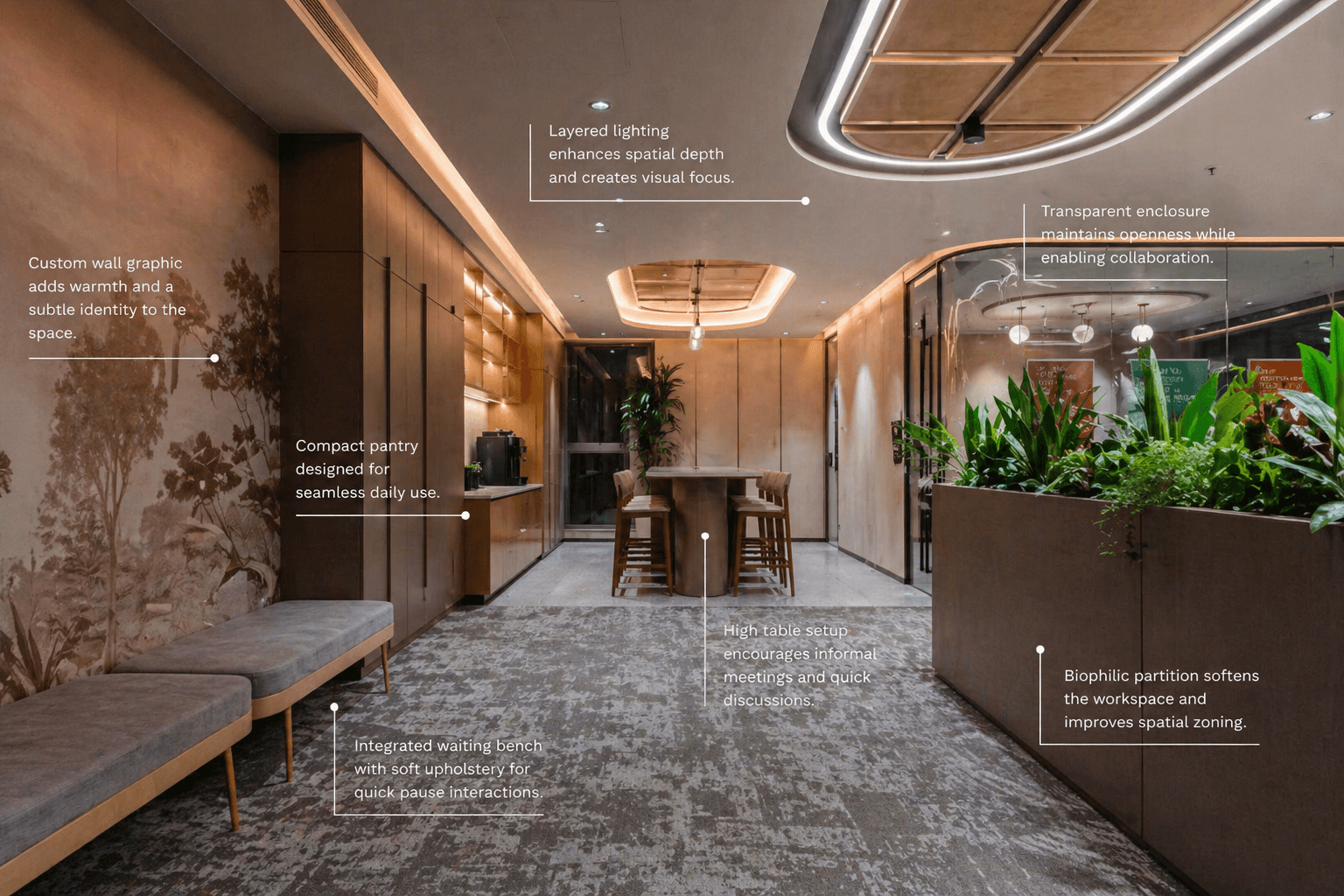
Formal reception areas
The space should communicate authority and trust.
2. Privacy vs. Transparency
Tech:
Transparency fuels collaboration. Teams brainstorm openly.
Acoustic control matters, but openness is often encouraged.
Law Firms:
Confidentiality is non-negotiable.
Client discussions, case documents, and negotiations require:
High acoustic insulation
Enclosed offices
Secure storage
Controlled access zones
One thrives on openness.
The other depends on discretion.
3. Layout Strategy
Startup Layout Priorities:
Agile workstations
Hot desks
Townhall spaces
Collaboration-first planning
Growth scalability
Law Firm Layout Priorities:
Partner cabins
Dedicated associate work areas
Conference rooms
Client meeting suites
Library or document archive zones
Planning isn’t just spatial — it’s operational.
4. Brand Expression
Tech Offices:
Bold colors
Graphic walls
Writable surfaces
Biophilia
Casual furniture
Innovation should be visible.
Law Firms:
Refined material palette
Wood, stone, muted tones
Timeless detailing
Subtle branding
Credibility should be felt immediately.
5. Client Experience
A startup’s office might prioritize team culture first.
A law firm’s office must prioritize client perception equally — sometimes more.
From reception design to meeting room acoustics, every touchpoint shapes trust.
The Real Takeaway
Industry-specific design isn’t about trends.
It’s about aligning space with business model, team behavior, and long-term strategy.
A startup office that looks like a law firm may stifle innovation.
A law firm designed like a startup may compromise confidentiality.
Good workspace design isn’t generic.
It’s strategic.